
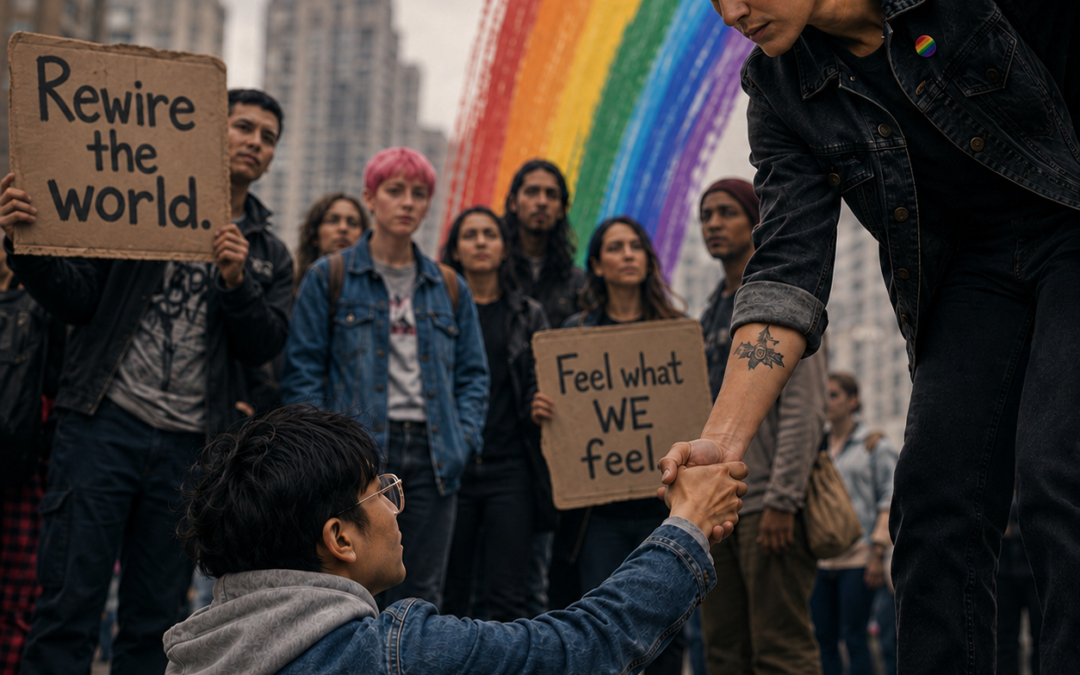
We talk about empathy as though understanding another person is the final goal. We listen, acknowledge their experience, and tell ourselves that we care. That matters, but it is only the beginning.
You can understand that someone is suffering and still do nothing to help them. You can feel moved by a queer story and continue supporting the people, institutions, or policies causing that harm. Feeling something does not automatically make us compassionate, courageous, or useful.
Empathy without action is often just spectatorship.
Understanding Creates Responsibility
There is a comfortable version of empathy that asks very little of us. We watch a documentary, share a post, change a profile picture, or tell someone that their story was powerful. We feel connected for a moment, but nothing about our behavior changes.
Once we understand what another person is facing, we have a decision to make. We can protect our comfort, or we can allow that understanding to affect how we act.
Real empathy may require us to interrupt an offensive joke, challenge a relative, question a workplace policy, or defend someone who is not in the room. It can mean reconsidering the church, company, political party, or social group we support. It may cost us approval, access, or convenience.
That discomfort does not mean empathy has gone too far. It means empathy has become real.
Queer Stories Are Not Entertainment
Queer experiences are often treated as temporary emotional journeys for other people. Someone watches a film, reads an article, or participates in an immersive experience. They feel sadness, admiration, or sympathy, and then they return to their life.
Queer people remain inside the reality being discussed. We continue living under the laws being debated, within the families being divided, and inside the schools, workplaces, churches, and medical systems where our identities are still questioned.
Our lives do not end when the story does.
This is why queer storytelling must do more than make people feel sorry for us. Sympathy keeps a safe distance. Empathy should challenge that distance and ask a harder question: What does this experience require of me?
Queer Reflection is not only asking whether a story moved you. It is asking whether that story changed how you see, think, vote, speak, or respond.
Convenience Is Part of the Problem
The opposite of empathy is not always hatred. Often, it is convenience.
It is easier to remain quiet than to correct someone. It is easier to avoid conflict than to defend a transgender coworker or queer family member. It is easier to describe an injustice as “complicated” than to admit that addressing it might disrupt our relationships or beliefs.
Oppression does not survive through cruelty alone. It also survives because ordinary people decide that resistance would be uncomfortable, awkward, or inconvenient.
We have seen this throughout queer history. People are repeatedly told to wait until the public is ready, until the election is over, or until equality becomes less controversial. The people asking for patience are rarely the ones whose lives and rights are being delayed.
Solidarity that disappears when it becomes inconvenient is not solidarity.
Being Moved Is Not the Same as Being Changed
A powerful story can create a genuine emotional response. Technology can place us inside an experience we have never lived. A personal account can make an abstract issue feel immediate and human.
Those moments are valuable, but emotion alone is not transformation.
Transformation happens when the experience follows us home. It changes what we tolerate, who we defend, what we support, and how we respond when another person is being diminished. It changes the questions we ask and the assumptions we are willing to reconsider.
Queer Reflection is not designed simply to make people cry, feel inspired, or congratulate themselves for being open-minded. The goal is to make indifference harder to maintain.
Did the experience reveal an assumption you had not examined? Did it help you understand the human cost of a political position or social belief? Will you behave differently when a real person needs your support?
That is where empathy becomes meaningful.
Empathy Requires Courage
Courage does not always involve a protest, a speech, or a public confrontation. It can be as simple as using the correct name and pronouns when others refuse. It can mean challenging a harmful statement made by someone you love. It can mean asking who has been excluded from a conversation or defending someone when there is no audience or reward.
Courage is deciding that another person’s dignity matters more than your desire to avoid discomfort.
That is empathy in action.
What Queer Reflection Is Asking
Queer Reflection invites people to enter another person’s emotional reality, but entering is not enough. You have to carry something back with you.
Carry the understanding that every identity being debated belongs to a human being. Carry the memory of what exclusion felt like, even when you experienced it only briefly. Carry the discomfort of recognizing your own assumptions and the responsibility to respond differently when the next opportunity appears.
Reflection should not become endless contemplation. The purpose of seeing ourselves more clearly is to decide what we are going to do with that knowledge.
Empathy is not pity, politeness, or proof that we are one of the “good” people. It should interfere with indifference and make neutrality more difficult.
Once we understand that someone is being harmed, we have a choice. We can remain spectators, or we can act with courage.
A Queer Reflection
Think about a time when you understood that someone was being harmed but chose not to intervene.
What stopped you? What might you do differently when the next moment comes?
Feel what they feel. Rewire the world.


