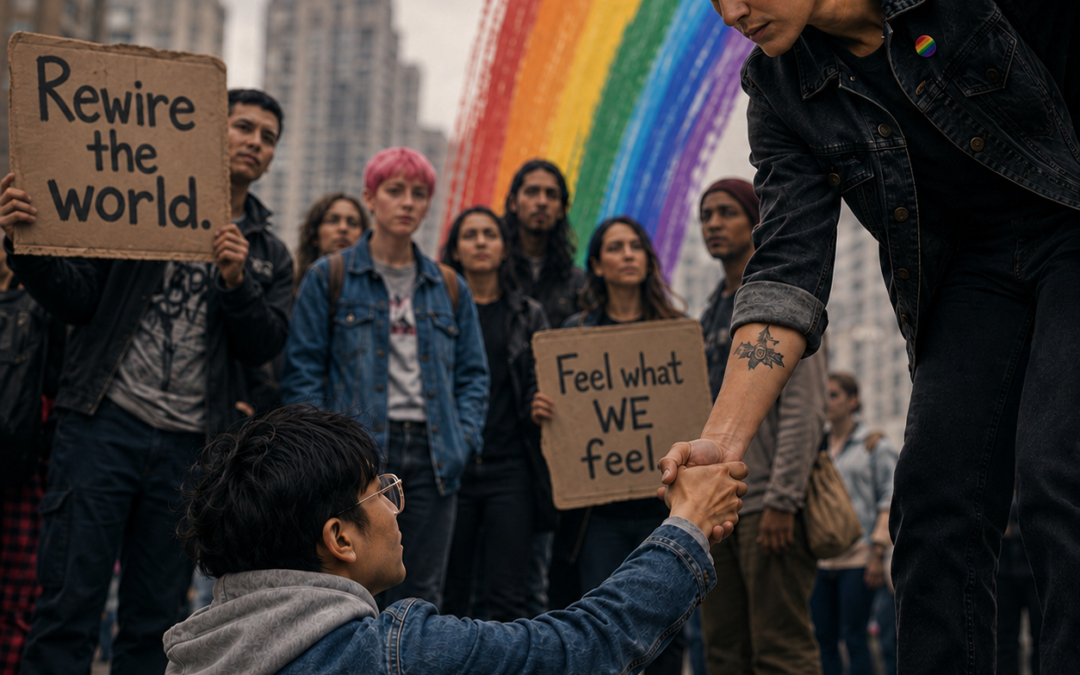
Empathy is not the same as action. Understanding another person’s experience only matters when it changes how we speak, vote, respond, and stand up for others. Without courage, empathy can become little more than watching from a safe distance.
Queer San Francisco’s geography is vanishing, but the technology to bring it back already fits in your pocket. At 18th and Castro, an augmented-reality memorial layer could restore the bars, bookstores, bathhouses, theaters, and ghosts that built the city’s queer inheritance.
A fierce manifesto on trans rights, political cowardice disguised as pragmatism, and why queer solidarity means refusing to let the most vulnerable be treated as expendable.
In an age of artificial intelligence and rising political dehumanization, the most radical act may be insisting on empathy, dignity, and our full humanity. This essay explores why EmpathyTech matters, how AI can scale human bias, and why queer insight belongs at the center of the future we are building.
This Women’s History Month arrives with urgency. As DEI programs are dismantled, LGBTQ+ research defunded, and queer stories removed from shelves, erasure is no longer abstract — it is organized. And yet history teaches us something steady: women and queer people have faced this before. They organized. They created. They refused. We are their continuation. This March, we honor the resisters — past and present — and recommit to empathy, story, and visibility as acts of resistance. We are still here.
Keith Haring turned art into activism—painting life, love, and protest into every line. In an era silenced by fear, he drew joy as resistance and made sure the walls could never stop talking.
Empathy is not the same as action. Understanding another person’s experience only matters when it changes how we speak, vote, respond, and stand up for others. Without courage, empathy can become little more than watching from a safe distance. […]
Queer San Francisco’s geography is vanishing, but the technology to bring it back already fits in your pocket. At 18th and Castro, an augmented-reality memorial layer could restore the bars, bookstores, bathhouses, theaters, and ghosts that built the city’s queer inheritance. […]
In an age of artificial intelligence and rising political dehumanization, the most radical act may be insisting on empathy, dignity, and our full humanity. This essay explores why EmpathyTech matters, how AI can scale human bias, and why queer insight belongs at the center of the future we are building. […]
This Women’s History Month arrives with urgency. As DEI programs are dismantled, LGBTQ+ research defunded, and queer stories removed from shelves, erasure is no longer abstract — it is organized. And yet history teaches us something steady: women and queer people have faced this before. They organized. They created. They refused. We are their continuation. This March, we honor the resisters — past and present — and recommit to empathy, story, and visibility as acts of resistance. We are still here. […]
Queer Reflection’s new Empathy Map worksheet is a powerful tool for creators, educators, activists, and anyone seeking to better understand the emotional experience of queer lives. Ground your storytelling, design, or outreach in lived truth—and help build a world that truly listens. […]
The Shoulders We Stand On is our ongoing blog series honoring the queer pioneers whose courage and defiance paved the way—and continue to inspire generations.